
The Human Animal
To navigate any terrain, whether a remote savanna or a high-rise boardroom, we must first remember who we are. Not titles, not roles, but animals – Homo sapiens. For more than 200,000 years, we lived as foragers, inseparable from the landscapes that sustained us. This long evolutionary stretch didn’t just shape our bodies – it carved the architecture of our minds, our senses, our social instincts.
In that vast expanse of time, survival depended on more than intelligence. It demanded awareness – finely tuned, moment-to-moment, embodied. Our ancestors honed their senses like instruments. They read the wind, listened for silence, smelled change. These were not luxuries. They were life-saving tools.
Today, many of us move through digital landscapes with nervous systems still wired for the ancestral savanna. Evolutionary psychologists suggest that our modern minds, filled with inboxes and notifications, still run ancient software. We carry within us a forager’s brain trying to make sense of a post-industrial world. We have more comfort than ever before, yet anxiety, depression, and disconnection surge.
Running Ancestral Software in a Post-Industrial World
The clues to our unease lie in our estrangement from the wild. Our ancestors moved through the world as part of it, not apart from it. Their senses were tools of navigation, not distractions. They noticed the snap of a twig, the shift of cloud patterns, the alarm call of a bird. This wasn’t mysticism; it was ecological literacy.
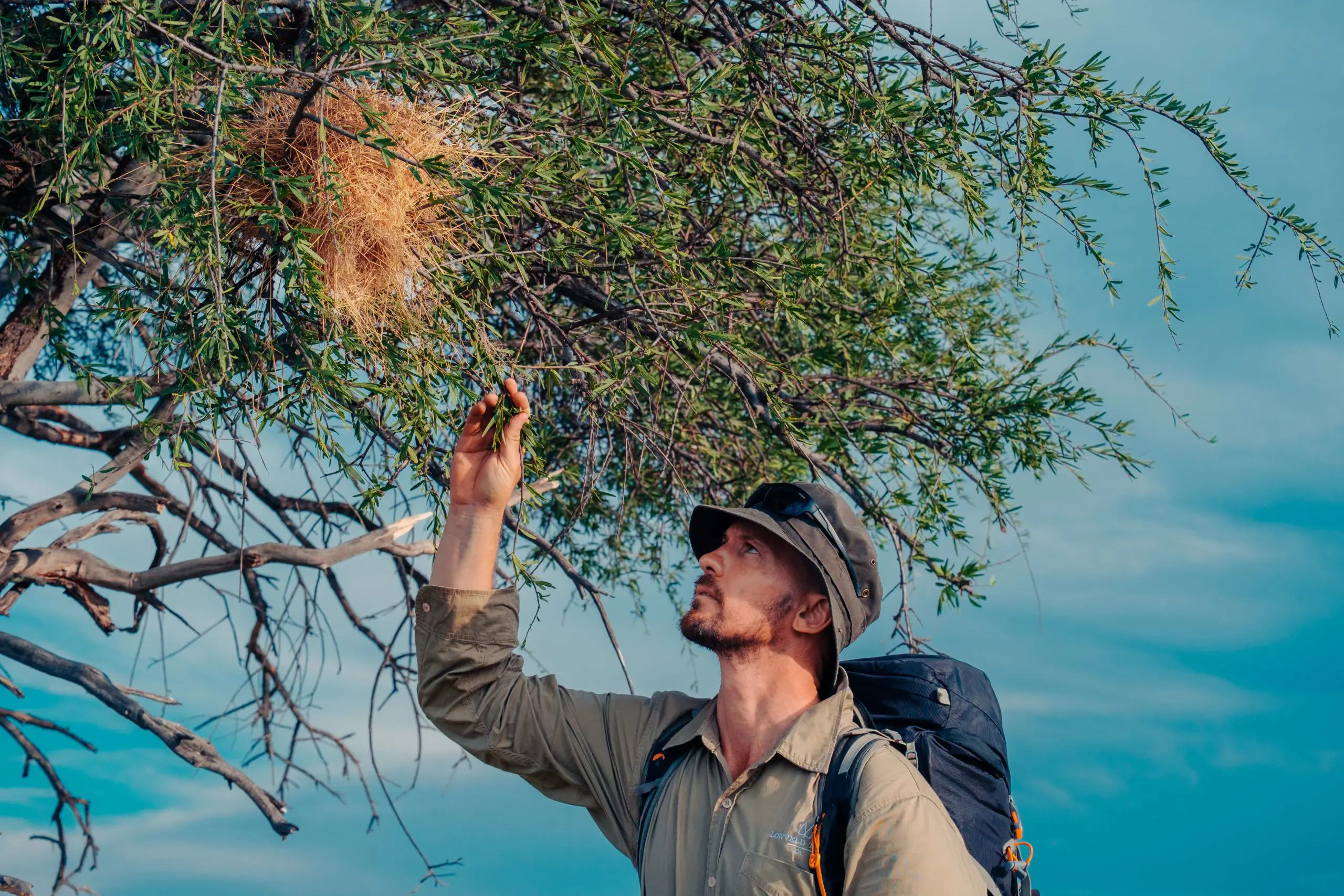
Skilled Wilderness Trails Guides still live by this literacy. They scan tracks in the sand, listen for the oxpecker’s trill, and sense shifts in wind before they’re visible. They ask silent questions: Who passed here? When? Are they calm or agitated?
“This is the art of seeing before you are seen, hearing before you are heard, and smelling before you are smelt. It’s not instinct. It’s a practiced presence.”
This is how humans lived for millennia: attuned, aware, alive in the moment. They carried mental maps of waterholes, animal migrations, edible plants, and medicinal roots. They moved in rhythm with the land. They believed in the sacredness of the wild – not out of superstition, but reverence born from necessity.
The Extinction of Experience
But something shifted. With the rise of agriculture, then industry, then digital life, we began to sever that connection. We paved over the cues. We muffled our senses. Many now suffer what ecologists call the “extinction of experience” – a fading familiarity with the natural world and our place within it.
Yet our sensory potential is vast. Depending on how we count them, humans may have 20 to 30 sensory modalities – proprioception, interoception, and even mindsight: our ability to feel the emotional currents in a room or detect danger before it becomes conscious. This is no fantasy. The brain’s anterior cingulate cortex can perceive environmental change before we name it. We know more than we think we do.
And when that knowing is dulled, we suffer. Philosopher Glenn Albrecht coined the word solastalgia to describe the distress of losing a beloved landscape – a homesickness for a place that still exists but has been wounded. We are wired to need nature. Remove us from it, and the human animal begins to fray.
We are wired to need nature.
Remove us from it, and the human animal begins to fray.
The Neuroscience of Solastalgia and Eutierria
This is why the more high-tech our lives become, the more nature we will need. Psychologists studying the “hybrid mind” suggest that without immersion in the natural world, our cognition dims.
One remedy is what they call “deep green exercise” – full sensory engagement in wild spaces, ideally with manageable risk. It reawakens dormant circuits. It can produce eutierria – a euphoric sense of oneness with the Earth. This is not nostalgia. It is neuroscience. It is survival.
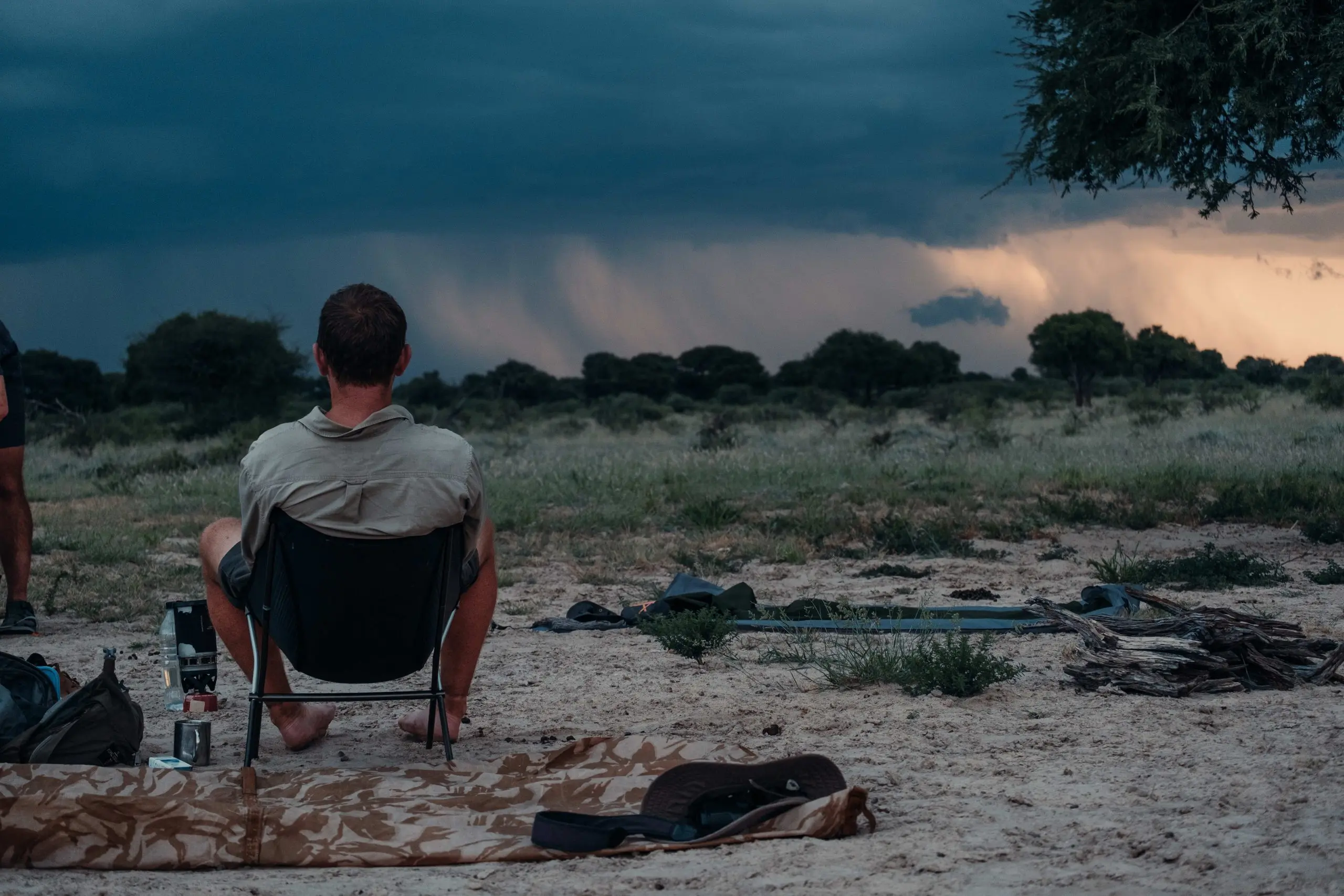
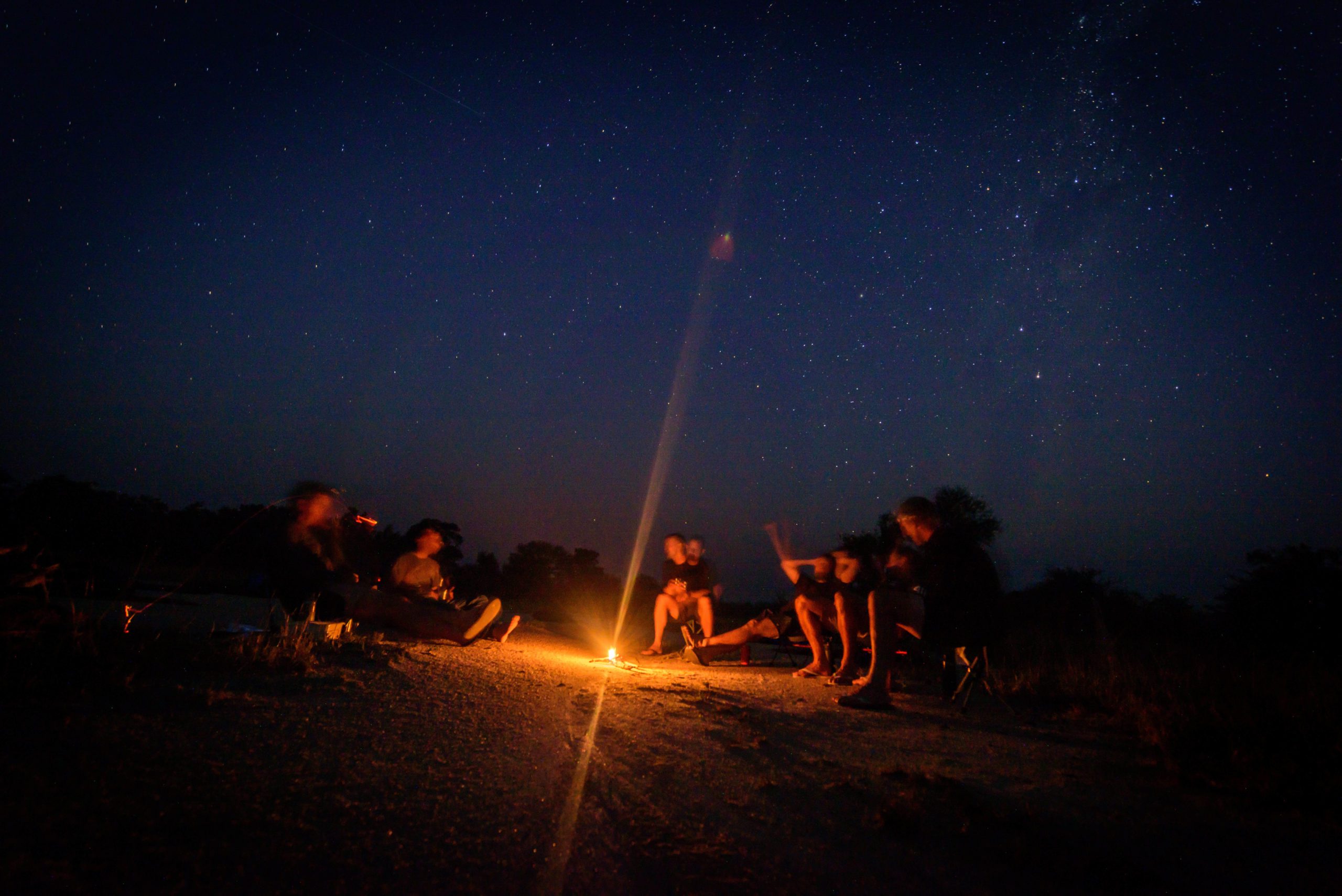
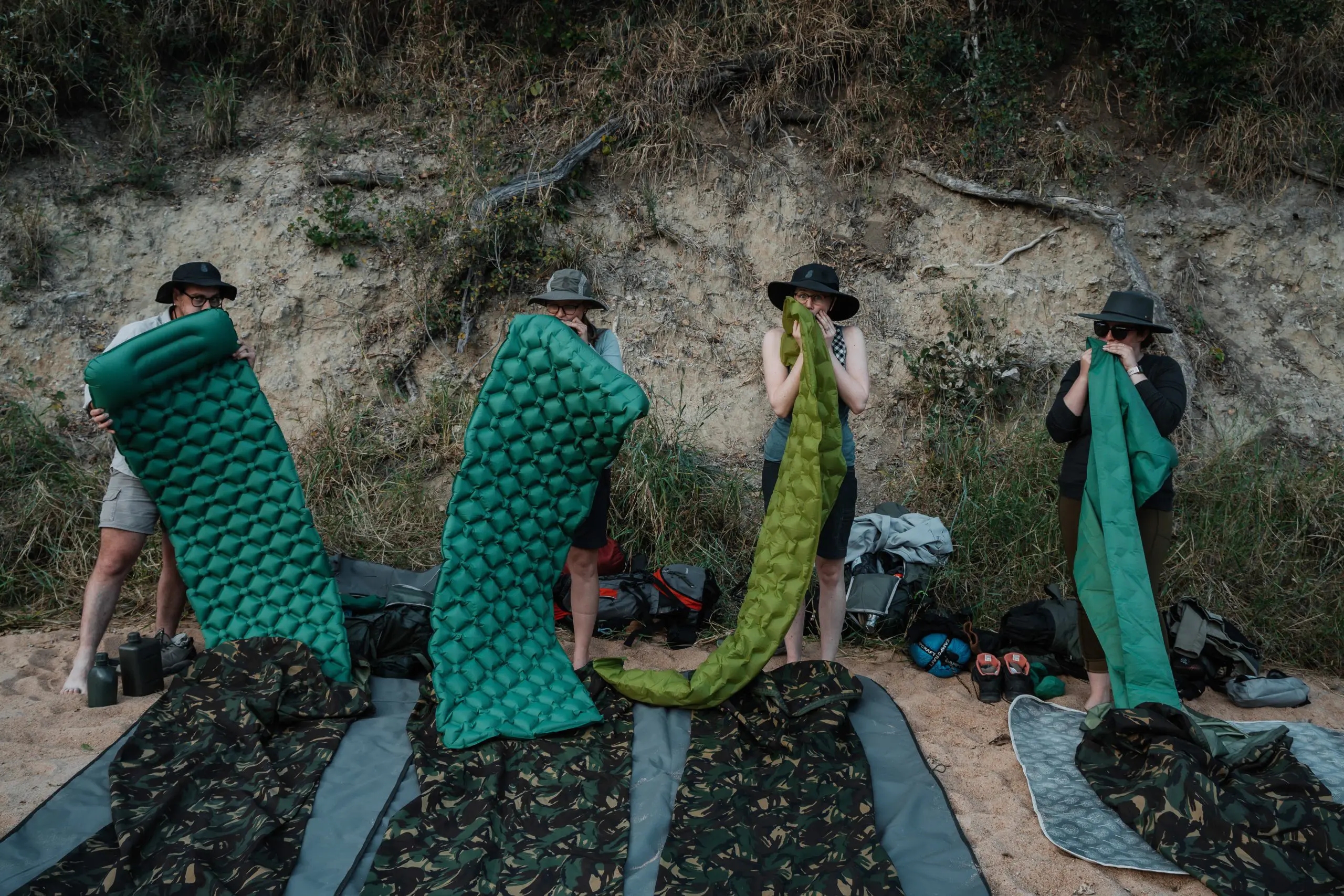
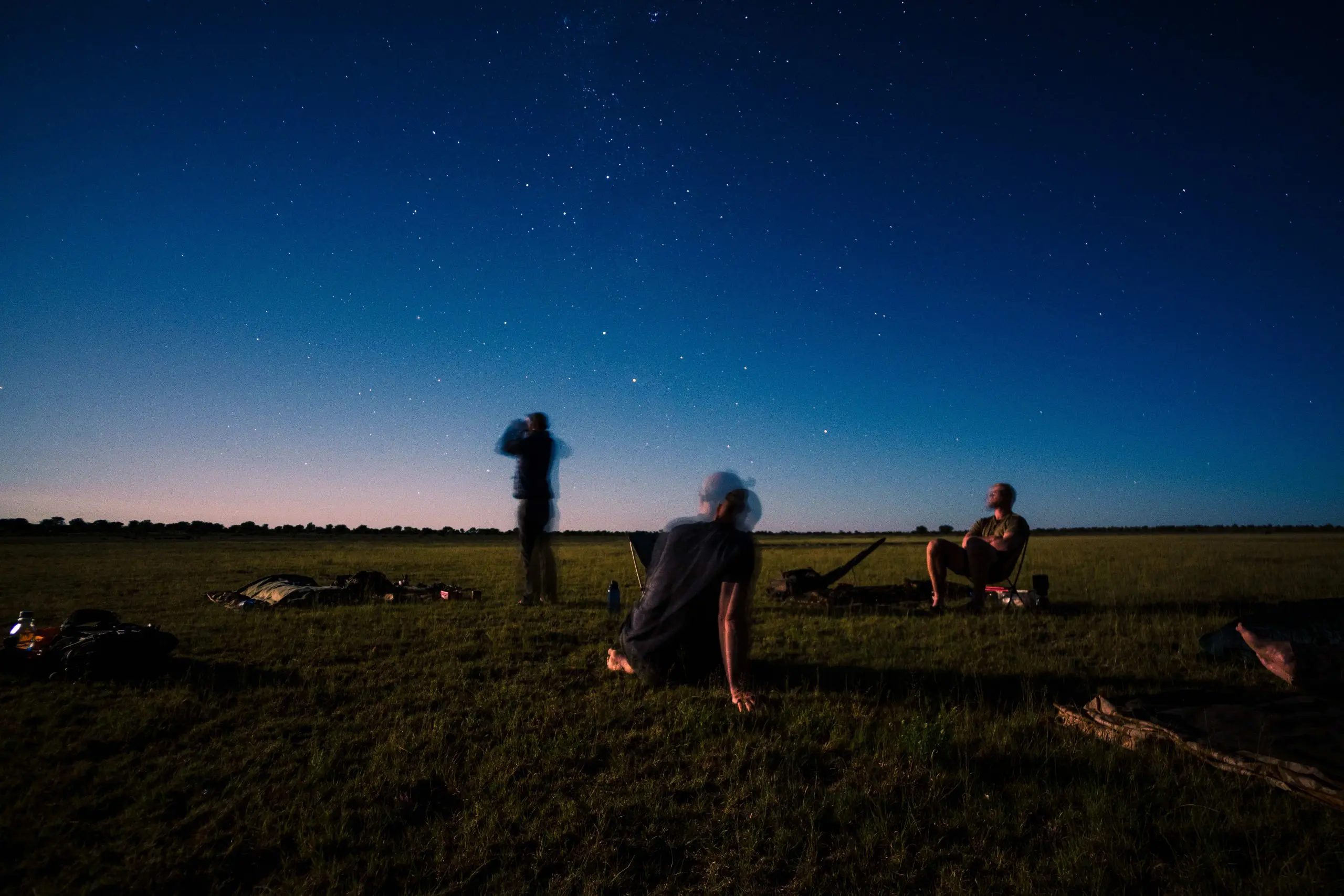
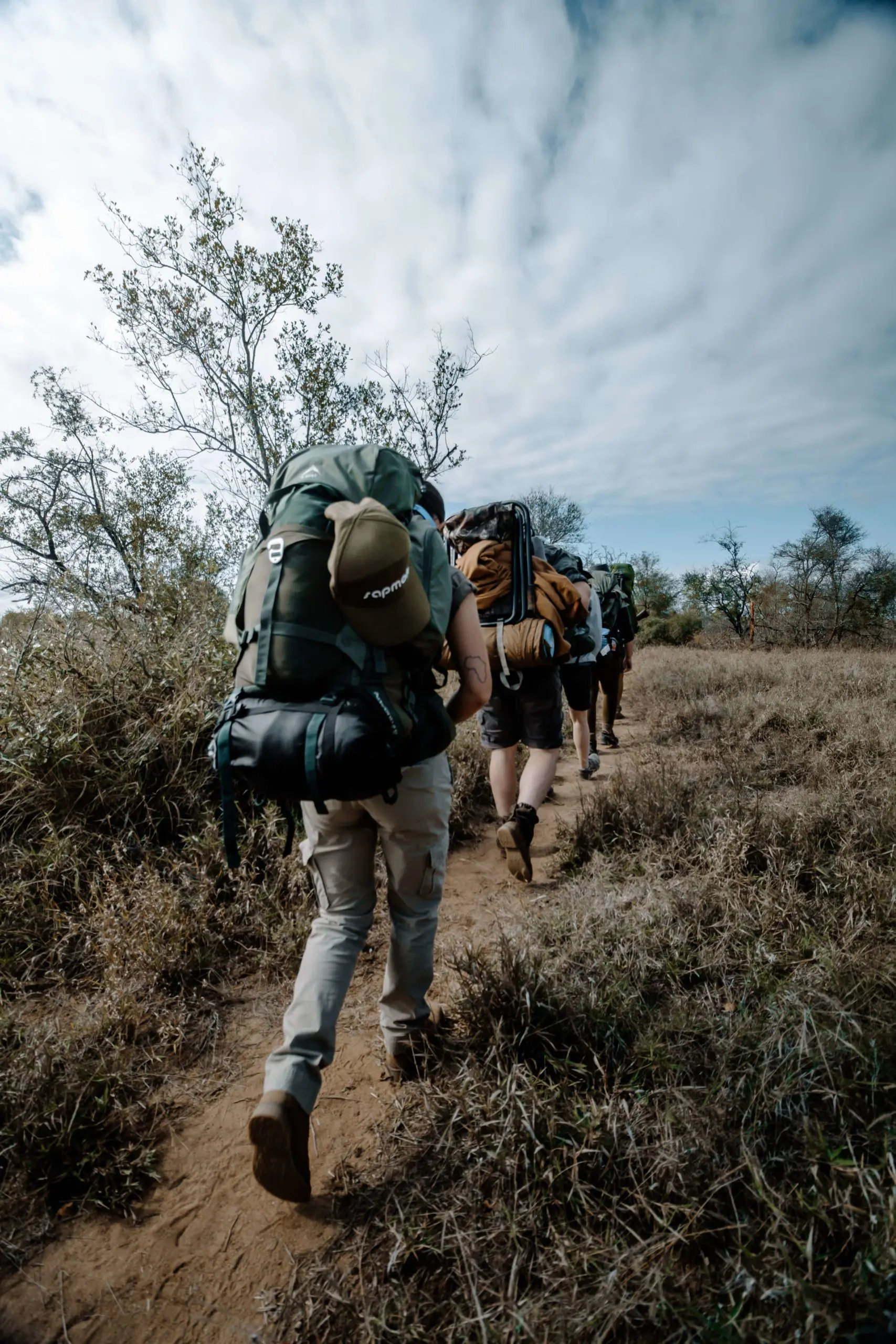
For the past 20 years, I’ve guided Primitive Trails. These immersive journeys strip away the trappings of modern life. No tents. No tech. Just backpacks, firelight, and nights beneath the stars. Each participant shares the responsibility of watch duty. There are no fences between you and the wild. Only presence.
Some consider this dangerous. And perhaps it is. We are small, soft creatures in an unpredictable ecosystem. Every animal out here is stronger, faster, toothier.
But Homo sapiens has survived the African savanna for hundreds of thousands of years – not through strength, but through awareness. Through strategy. Through an unparalleled ability to read the landscape and respond.
Realigning with Our Essential Nature
The greatest danger is not lions or elephants. It’s disconnection. The extinction of experience may prove to be one of the defining crises of our time. Mental illness rates rise. Ecological degradation accelerates. We are forgetting who we are, and where we belong.
As Dr. Ian McCallum beautifully reminds us:
“We have forgotten where we come from, that we are merely the human expression of nature, that we are biologically and psychologically bound to the landscape and all living things, that wild spaces are not only conditions for life, but that our sanity depends on their existence too.”
My purpose as a Wilderness Trails Guide is to facilitate a return. To kindle ancient relationships. To rewild the imagination. I do it for my children, and for yours.
Is what I do risky? Of course. But so is life on the highway and in the city. So is ignoring the call of the wild. Whether in a boardroom or on an animal trail, we are all navigating uncertain terrain. We gather information to mitigate risk and seize opportunity. The landscape looks different, but the rules are the same.
Time in the wilderness invites us to realign with our essential nature. It challenges our assumptions. It asks what is truly necessary. And it has the power to awaken something long dormant.
The wild is not only out there. It is in all of us. Let us reawaken the human animal.