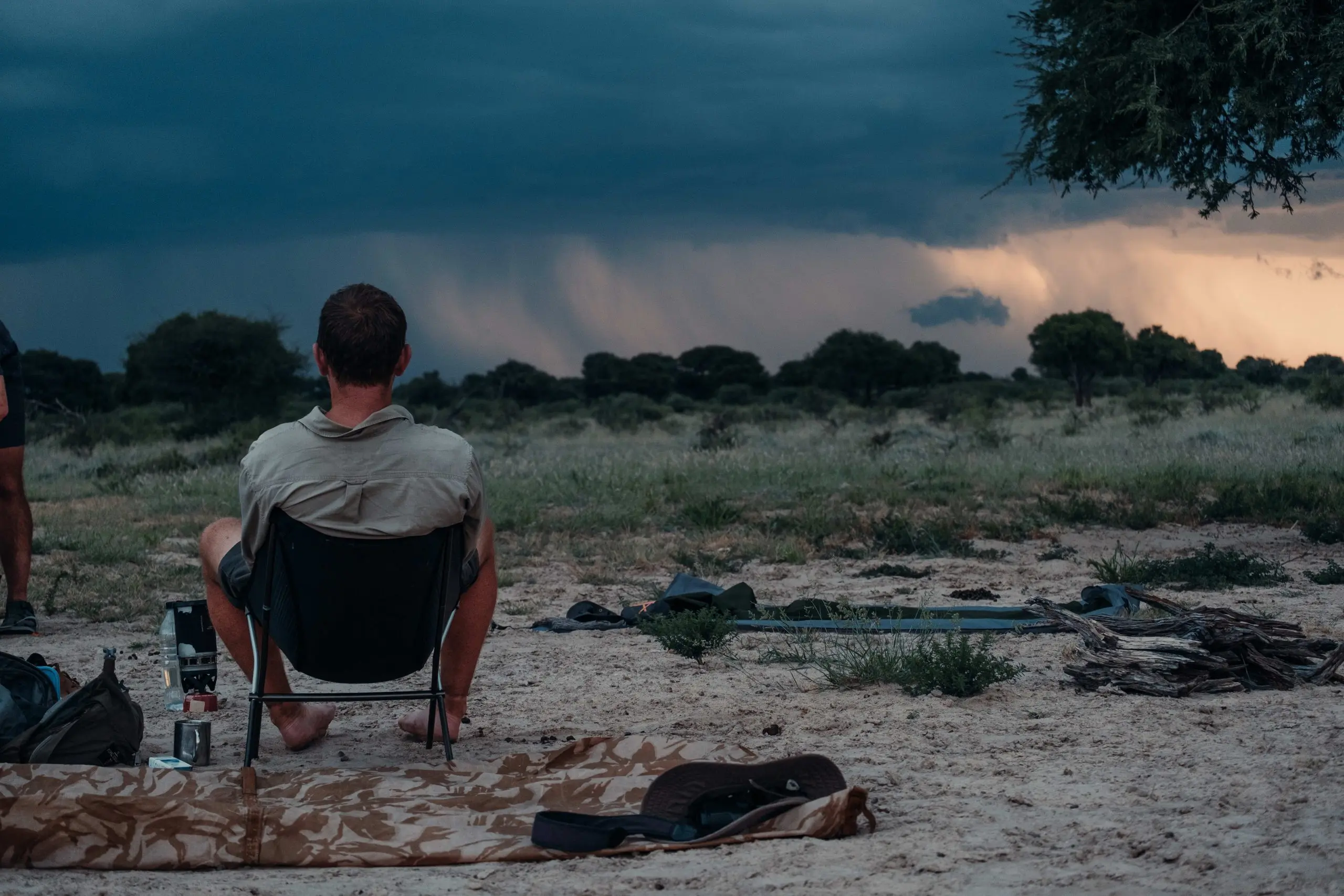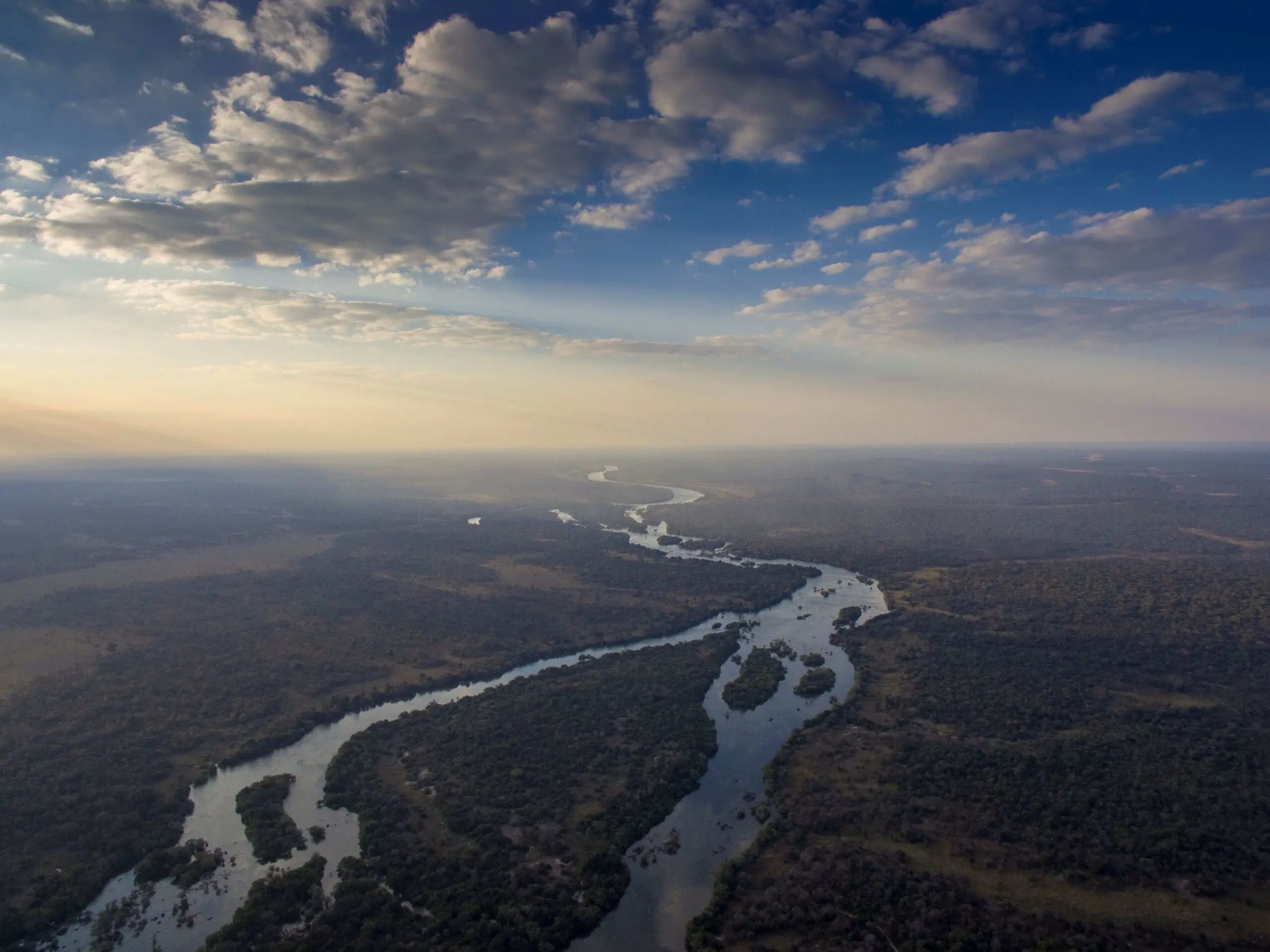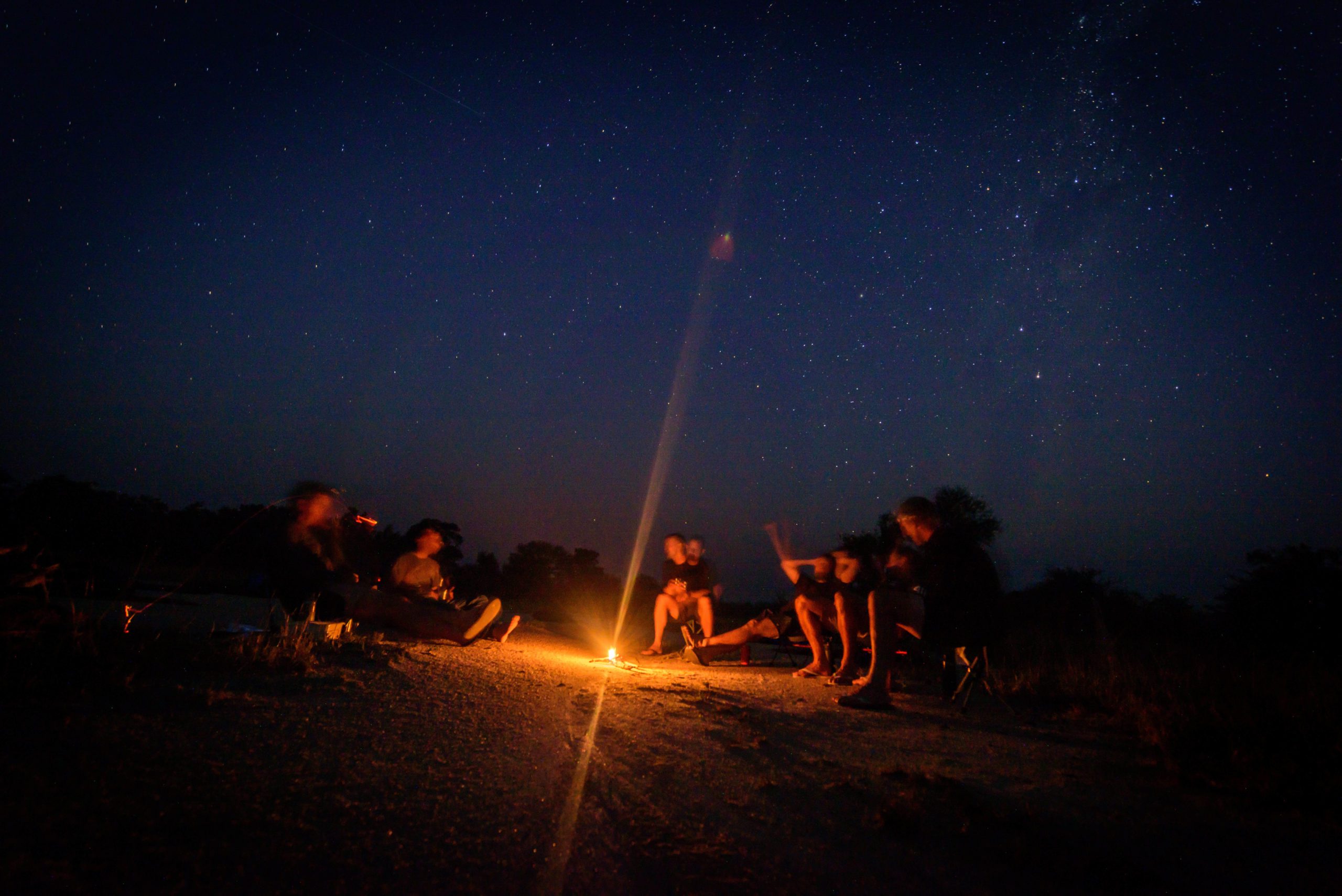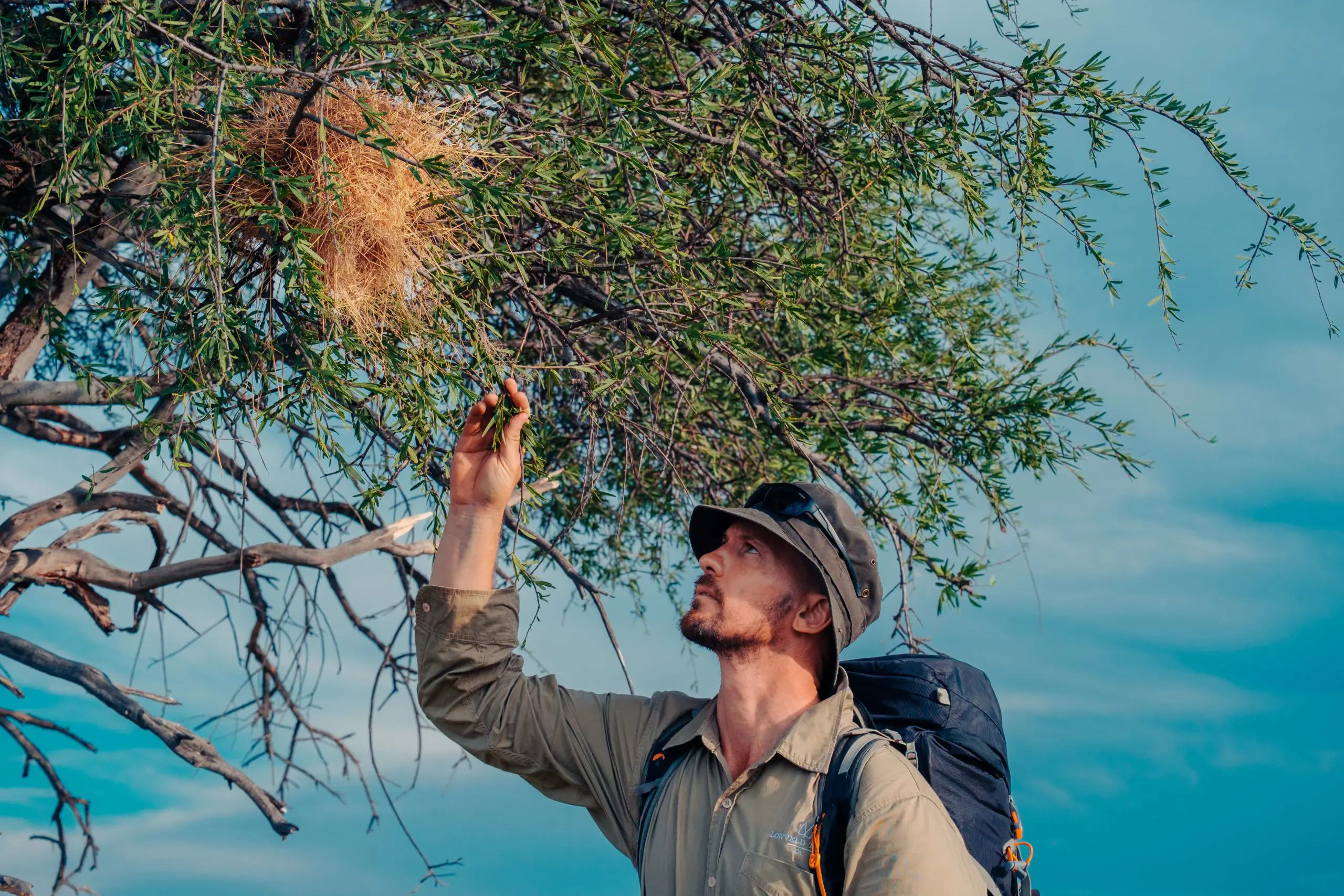


For years, Wilderness Trails Guides have sensed it. The quiet recalibration that happens when we step away from the madness of modern life and return to wild, unpredictable landscapes. Something subtle unfolds out there: the breath slows, thoughts settle, and the pulse of the wild begins to sync with our own. The body seems to remember an ancient rhythm – one shaped by movement, sunlight, and silence.
This season, we set out to measure that rhythm.
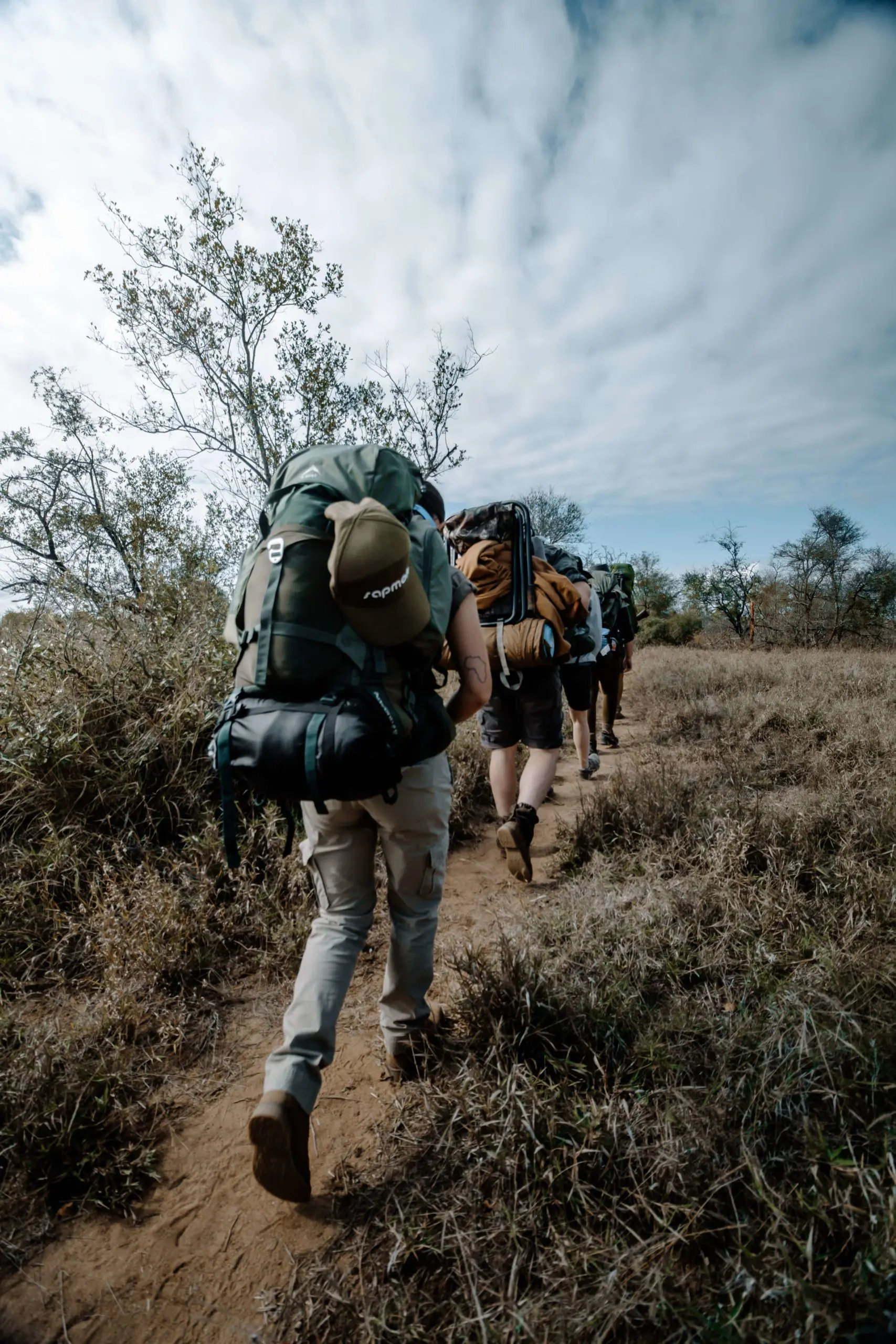
Lori Cilliers, one of the experienced Lowveld Trails Co. Wilderness Trails Guides, conducted a total of sixteen Primitive Trails between April and October of 2025. These are multi-day, unsupported walking safaris deep into the wild, where there are no vehicles, no electricity, and no modern comforts. Just open horizons, firelight and the steady rhythm of feet on the earth. Throughout the season, Lori wore a WHOOP device, a performance wearable that tracks physiological data such as sleep, strain, and recovery. The results told a powerful story – one that bridges intuition and science, and reaffirms what we’ve always known: time spent in the wild is profoundly restorative.
Measuring the Wild: The WHOOP Device
WHOOP is designed primarily for athletes and high-performance individuals, offering continuous monitoring of the body’s recovery and readiness. It collects data on resting heart rate, respiratory rate, and – most importantly – Heart Rate Variability (HRV), a key marker of nervous system balance.
HRV represents the variation in time between individual heartbeats. Rather than a perfectly steady rhythm, a healthy heart actually fluctuates – adjusting microseconds between beats in response to the body’s shifting needs. A higher HRV indicates flexibility and resilience within the autonomic nervous system, suggesting that the body can efficiently adapt to stress and recover. In contrast, a lower HRV often signals fatigue, chronic stress, or poor recovery. In essence, HRV is the body’s way of revealing how well we are coping with life – moment by moment.
The Data: What the Wilderness Did to the Body
Metric | At Home | On Trail | Change/Significance |
Heart Rate Variability (HRV) | 98.9 ms | 116.6 ms | +17.9 ms (≈ +18%) – marked improvement in nervous system recovery |
Sleep Performance | 74.1% | 75.1% | Slight improvement despite greater physical strain |
Deep Sleep Duration | +20–25 minutes per night | Significant increase in restorative sleep |
Over the course of the season, Lori’s WHOOP device recorded clear and consistent changes in her physiology while she was on trail compared to her time at home.Despite long days on foot, exposure to the elements, and minimal comfort, Lori’s body showed enhanced physiological recovery while immersed in Wilderness. Her HRV increased by approximately 18% while out on trial, a substantial improvement in autonomic balance.
To put this in perspective, performance and wellness coaches who use WHOOP, Oura, and Elite HRV systems commonly describe 5–10% increases as “strong recovery improvements,” while >15% gains are considered outstanding. Data trends and literature reviews (Dong 2016; Plews 2018; Laborde 2017; Stanley 2013) confirm that such changes are typically associated with deep parasympathetic recalibration – the nervous system shifting from stress (fight-or-flight) toward rest, repair, and resilience.
Lori’s +18% HRV increase places her solidly within the “exceptional improvement” range – a level of nervous system recovery typically observed after multi-day mindfulness retreats or structured recovery blocks in elite athletes. Her data also showed 20–25 minutes more deep sleep per night, the critical stage linked to cellular repair, memory consolidation, and emotional stability.
Overall, the data suggests that her body entered a sustained parasympathetic state, signaling not just physical rest but deep biological coherence.
Why It Matters: The Nervous System in Nature
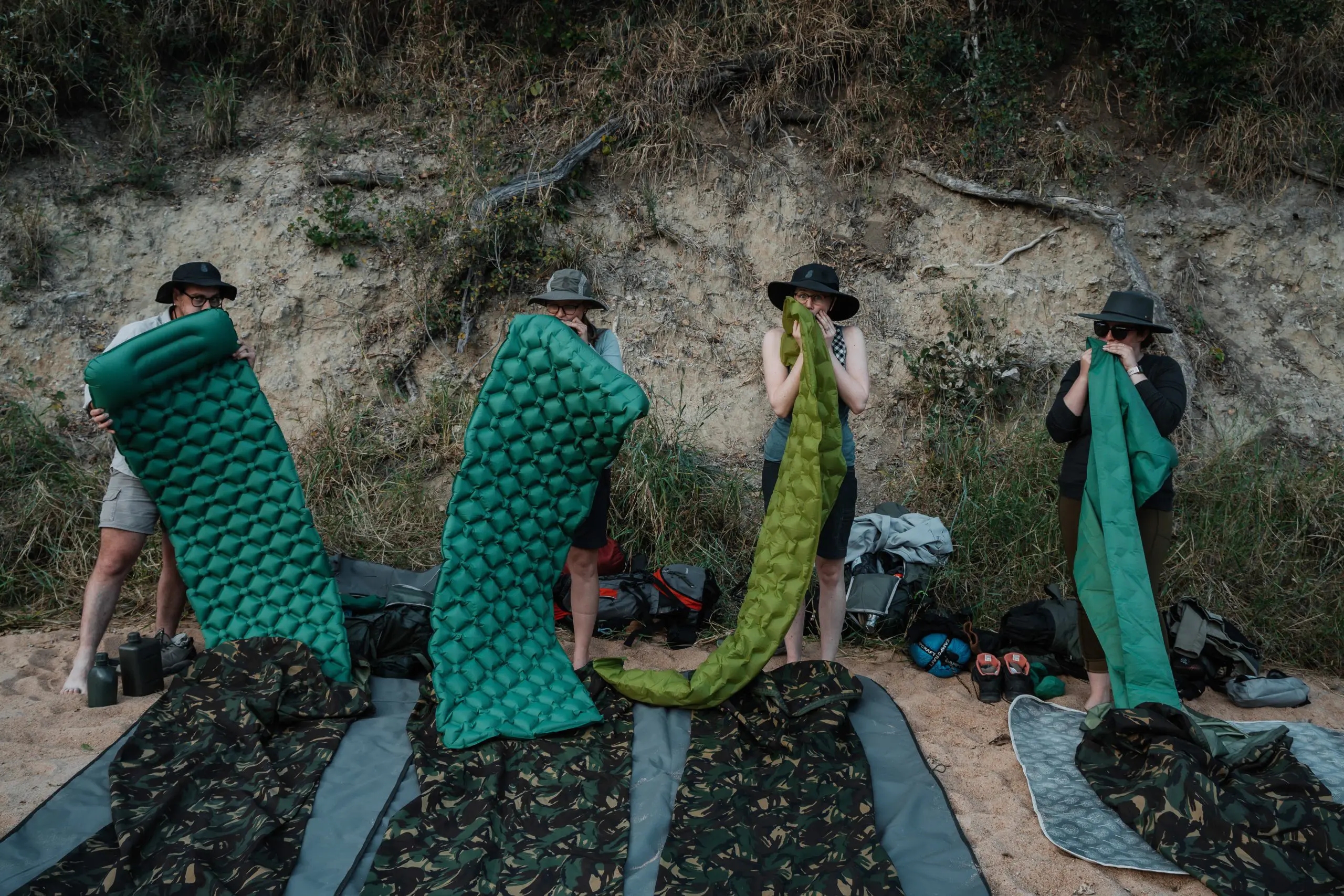
At first glance, these results seem counterintuitive. Primitive Trails are physically demanding and minimalist by design – sleeping on the ground, no comforting extras, and interrupted sleep due to a mandatory ‘night-watch’ (approximately an hour each night). Yet the data suggests that the Wilderness environment itself provides something modern life does not: the conditions for true physiological recovery.
Several factors likely contribute:
- Natural rhythm: Days aligned with sunrise and sunset restore circadian balance, enhancing sleep quality and hormonal regulation.
- Low cognitive load: Without phones, traffic, or schedules, the prefrontal cortex rests, allowing deeper nervous system repair.
- Physical movement: Long, slow walking promotes cardiovascular variability without overstimulation.
- Reduced artificial stimuli: The absence of digital input lowers baseline stress hormone levels.
- Connection and presence: Shared silence, sensory engagement, and natural awe activate parasympathetic tone.
Together, these elements return the body to the rhythm it evolved for – a rhythm modern life rarely allows.
“It’s as if my body remembers how to breathe again out there.” - Lori Cilliers
From Intuition to Evidence
For Wilderness Trails Guides and Primitive Trail participants, these findings are more than numbers; they validate what we experience viscerally. After a few days in the wild, people often speak of feeling lighter, calmer, or more awake. Lori’s WHOOP data gives these sensations a physiological foundation.
A higher HRV, improved deep sleep, and steady recovery scores are not just signs of rest – they are signatures of resilience. They suggest a nervous system that is responsive rather than reactive, a mind that is attuned rather than anxious, and a body that thrives when aligned with its evolutionary environment.
Quantifying What We Feel
While technology can never capture the full depth of what it means to be exposed to Wilderness at this level, it can reveal what the body already knows. The wild restores us. It lowers the hum of chronic stress, deepens our rest, and strengthens our ability to adapt – not by comfort, but by connection.
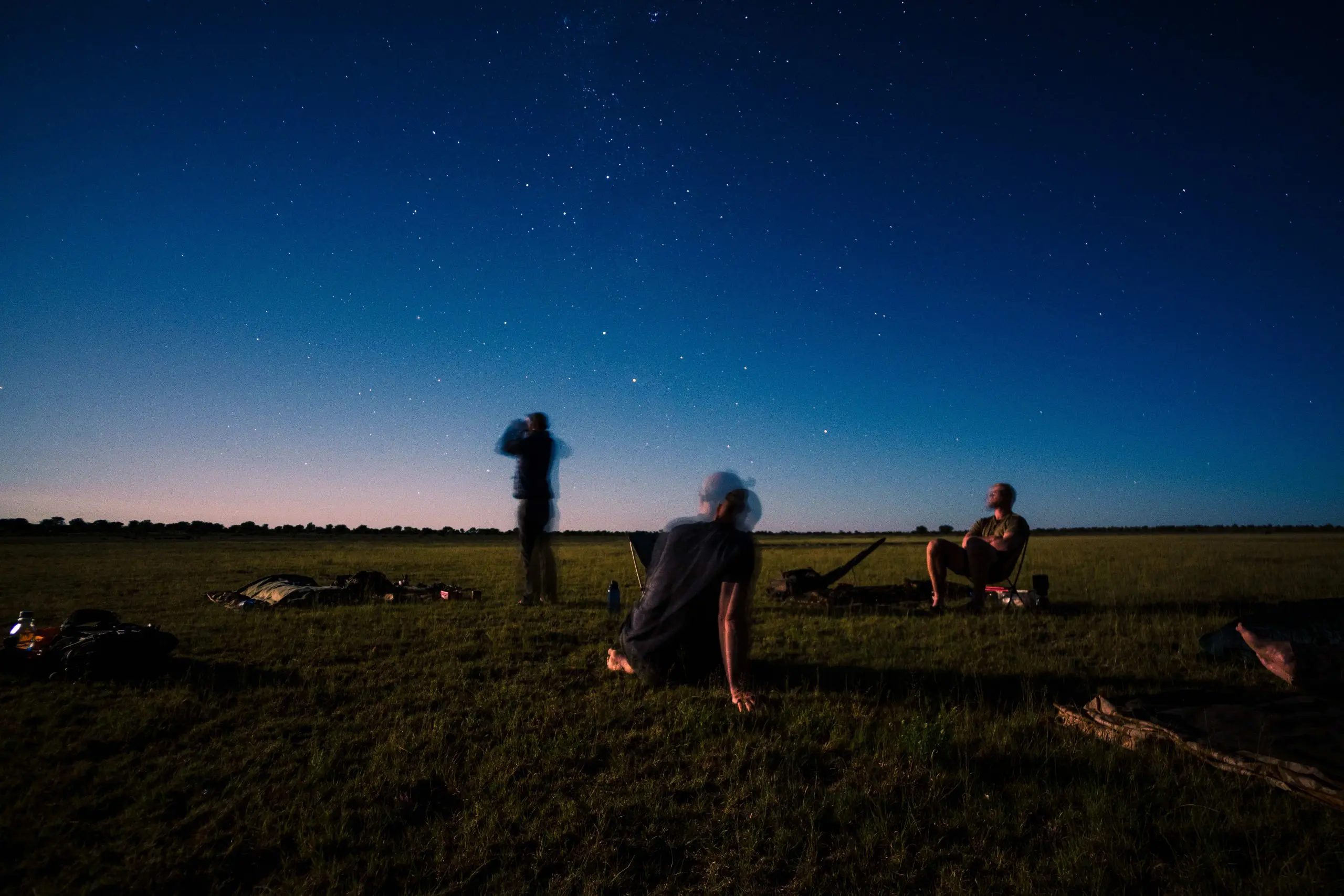
Lori’s season of data is a small but profound glimpse into something ancient: that the natural world is not a backdrop for adventure, but an active participant in our healing. Each step on a Primitive Trail, each sunrise and night under the stars, helps the body find its rhythm again – the rhythm of the wild, the rhythm of resilience.
On our final morning, tracks from a porcupine, a caracal and a leopard were on our path back to the vehicle. We stopped where a grasshopper had laid her eggs and watched a gabar goshawk hunting grey-backed sparrow larks. Still, for just a few minutes longer, out of time.